
Asset Management Software Development in India
A register is only useful on the day someone needs to prove where an asset is, what it cost and who signed for it. We build asset management software that answers those questions from one record instead of three spreadsheets.
Share your requirement, current setup, and expected timeline. We will help you scope the right service approach quickly.
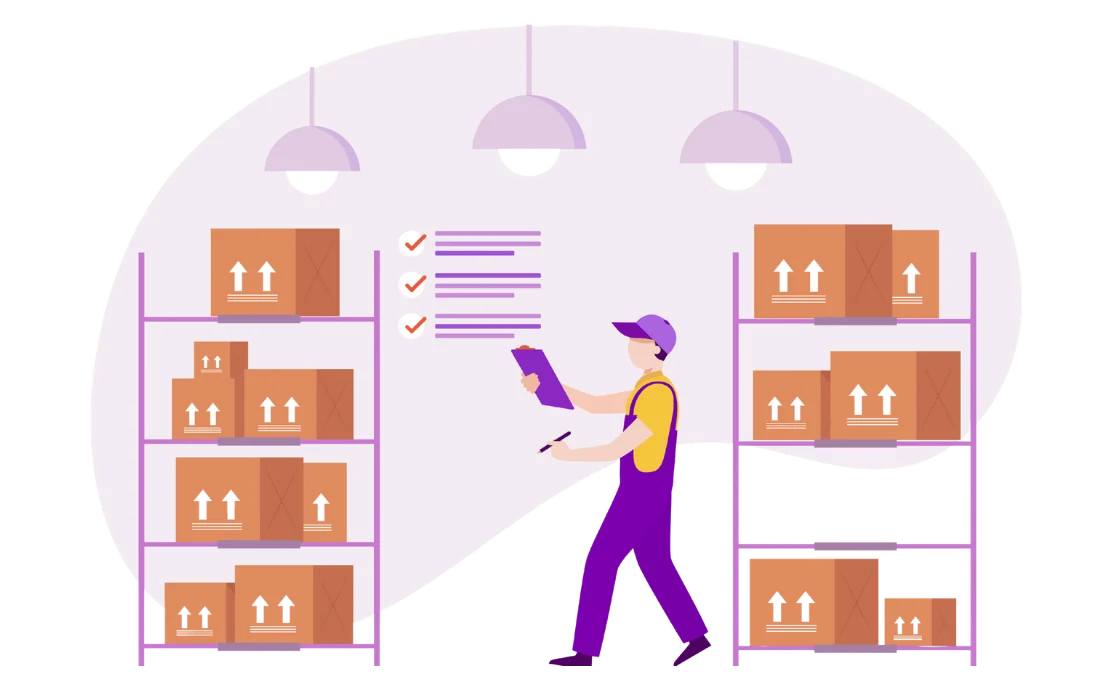
Asset Management Software
One connected partner for planning, implementation, support, and ongoing optimization around this service area.
Most companies already have an asset register. It lives in a spreadsheet that one person understands, and it is trusted right up to the first physical verification. The build becomes worthwhile when the register has to answer to finance, to an auditor and to the person holding the asset, all in the same week.
Why asset registers drift
Every register starts accurate and slowly loses contact with the floor. A laptop moves to a new desk, a projector goes for repair, a generator is replaced under warranty, and the record keeps the old story because nobody had a reason to open it.
The drift is rarely dishonesty. It is a missing step in a process. The person who knows about the move is not the person who maintains the register, and by the time the two meet, three more changes have happened.
Software earns its place when accuracy has a consequence: an audit, an insurance claim, a lease return, a depreciation schedule or a warranty dispute. At that point the register stops being housekeeping and becomes evidence.
A useful first release answers five questions about every item: what it is, how it is identified in the physical world, who holds it, what it is worth, and what has happened to it.
Not every business needs all six at once. The register and identification modules are the foundation, and the rest can follow once the first physical count proves that the foundation holds.
| Module | What it records |
|---|---|
| Asset master | Category, make, model, serial number, purchase date, invoice, cost, warranty and expected life |
| Identification | Asset code, QR or RFID tag, photographs and location history |
| Custody | Department, site, floor, assigned employee and acknowledgement of receipt |
| Valuation | Opening value, depreciation method, accumulated depreciation and written-down value |
| Maintenance | Service schedules, work orders, parts, vendors and cost per asset |
| Disposal | Write-off request, approval, sale or scrap evidence and removal from the active register |
Plant, furniture, vehicles and air conditioners behave differently from laptops, servers and network switches. A single system can hold both as long as the record carries the attributes each category needs.
An IT asset adds serial-level identity, warranty and AMC dates, assigned user, operating system, software licences and a retirement path. A fixed asset leans on location, depreciation and maintenance history. Both share the same custody and audit trail, which is why splitting them into two systems usually creates more work than it removes.
This is not an inventory system. Stock bought and sold is a different problem, with valuation by batch and movement by sale. An asset is something the business keeps and uses, and mixing the two makes both reports unreliable.
Finance teams rarely accept a single depreciation method for every category. Computers may follow written-down value while furniture follows straight line, and a mid-year purchase may need a pro-rata rule. The system should store the method per category and keep every recalculation as a version rather than overwriting the old number.
Transfers deserve the same treatment. A move from one site to another is a small event with a large audit consequence, so it needs a requester, an approver, a date and a receiving acknowledgement. When a physical verification later finds an item in the wrong place, the transfer history explains whether the register was wrong or the item was moved without a record.
A verification run should produce an exception list, not just a count. Found, missing, damaged, unlabelled and located-elsewhere are separate outcomes, and each one needs an owner and a closing action.
QR labels cost a few rupees each and work with any phone camera, which makes them the practical choice for offices, schools and factories where counting is done by hand. The limitation is line of sight: somebody has to stand in front of the asset and scan it.
RFID tags cost more per unit and need a reader, but a team can sweep a server room or a warehouse without opening every cabinet. The case for RFID is strongest where assets are small, numerous and packed together, or where a count has to happen during operating hours without disrupting work.
Both can coexist. A business may put QR on furniture and large equipment while using RFID for IT peripherals in stores. The register only needs to know which identifier is attached, not which technology won.
Manufacturers with plant and tooling, hospitals with biomedical equipment, schools with labs and devices, IT-heavy offices with leased laptops, and rental businesses that need to know what is available today all share the same underlying problem: the asset exists in more than one list.
If a packaged product already fits the category structure and the approval chain, buy it. A custom build makes sense when the register has to follow a process the package cannot express, or when the asset record has to connect to production, maintenance or client billing in a way that an off-the-shelf tool will not.
What to prepare before a scoping call
Bring the current register, even if it is incomplete. Bring the asset count by category and site, the depreciation methods your finance team actually uses, and one recent audit or verification finding that caused a problem.
It also helps to know how assets are identified today. If the answer is a sticker with a handwritten number, the tagging workflow is part of the project, not an afterthought.
Write to [email protected] with the register attached, or message the team on WhatsApp. A short call is usually enough to say whether a custom build or a packaged tool is the better spend.
Related reading: asset management software cost, custom ERP development, inventory management software cost and equipment rental software cost.
Asset Management Software You Can Trust
Our trained technicians deliver reliable asset management software with genuine parts, clear communication, and warranty-backed work. We focus on getting it right the first time.
Simple, Clear Process
Book a consultation, get a transparent quote, and we handle the rest. You stay informed at every step with regular updates.
Support You Can Depend On
From maintenance and issue handling to infrastructure and hosting support, we help teams stay operational without unnecessary complexity.
One Partner Across IT, Digital, and Software
Instead of juggling multiple vendors, businesses can manage websites, software, marketing, hosting, and IT through one dependable partner.


We Work With
Tell us your requirement and we will recommend the right next step.
Whether you need IT, cloud help, web work, software delivery, or digital growth support, we can help you narrow the right scope quickly.
Related Articles
Practical guides and insights related to this service.

App Maintenance Cost Comparison in India (2026)
What it costs to keep a mobile app alive in India in 2026, compared across support tiers, with the point where a rebuild is cheaper than another year of fixes.
Business Management Software Cost Comparison (2026)
Entry prices for business software across 42 industries in India, from bakery billing to warehouse control, with the modules that push each build higher.

Cloud Migration Cost Comparison in India (2026)
Migration and cloud setup costs in India compared by estate size, including landing zones, assessments, server moves and the optimisation work that follows.
Cybersecurity Cost Comparison in India (2026)
Hardening, testing, monitoring and incident response compared for Indian businesses in 2026, with the order that buys the most protection per rupee.